Is Your Software Holding You Hostage? 5 Signs You’ve Outgrown Off-the-Shelf Solutions | Hardik Kanajariya
DevOps
Dec 22, 2025
Is Your Software Holding You Hostage? 5 Signs You’ve Outgrown Off-the-Shelf Solutions
Struggling with slow workflows and spreadsheet hacks? Your "easy" software might be costing you growth. Here are 5 signs it's time to build your own solution.
Let’s be real for a second. When you first started your business, off-the-shelf software was a lifesaver. Maybe it was a simple CRM, a project management tool like Trello, or just a really organized set of Google Sheets. It was cheap, easy to set up, and it got the job done. It let you focus on getting customers rather than worrying about server architecture.
But lately, does it feel like that same software is fighting you?
I’ve been a full-stack developer and consultant for years, and I see this pattern constantly. A business hits a growth spurt—revenue is up, the team is expanding—but efficiency takes a nose-dive. You start to feel friction in processes that used to be smooth.
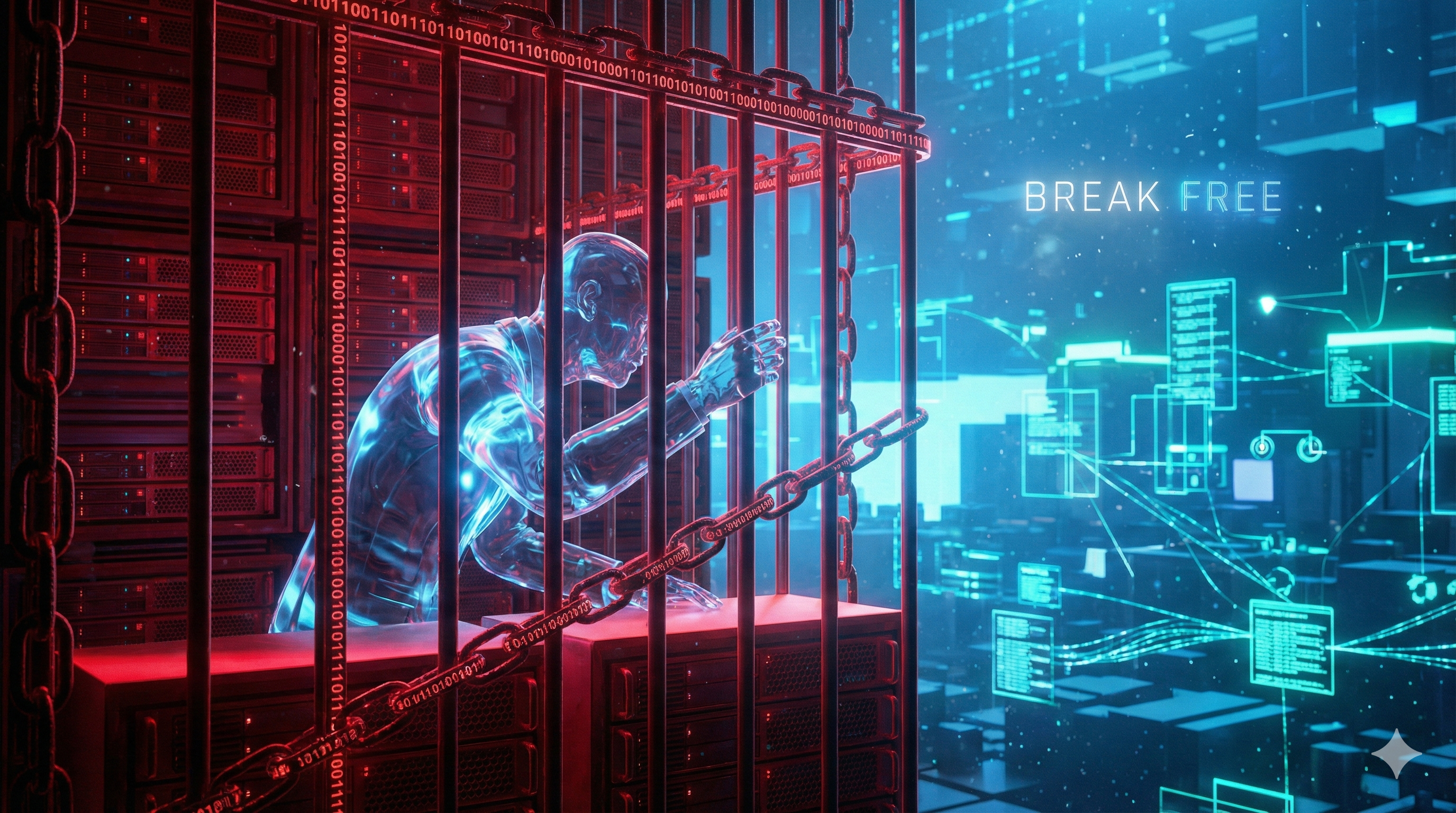
The problem isn't your team, and it often isn't even your management style. It’s the digital ceiling. You are trying to run a Ferrari engine inside a Toyota Corolla chassis.
If you’re wondering whether it’s time to invest in custom software, here are the glaring signs that your current tech stack is actively sabotaging your scalability.
You’ve Become a "Spreadsheet Gymnast"
Here is the classic scenario: You have a flashy ERP or SaaS platform, but your team spends half the day exporting data into CSVs and manipulating it in Excel to get the actual report you need.
If your core software can’t handle your specific data logic, you aren't using software; you’re using a very expensive calculator. Relying on "Excel glue" to bridge the gaps between your finance, sales, and inventory creates a massive margin for human error. One wrong formula, one copy-paste mistake, and your quarterly projections are garbage.
Custom software benefits include building the exact reporting dashboards you need, live. No exports, no manual data entry, no "spreadsheet gymnastics."
Your Workflows Are Dictated by the Tool, Not Your Strategy
This is the biggest silent killer of innovation. Off-the-shelf software is built for the "average" user. It follows standard industry workflows. But your business didn't succeed by being average; you succeeded because you do something differently.
I recently consulted with a logistics company that was using a generic dispatch tool. They had a unique way of routing drivers that saved them 20% on fuel, but the software didn't support that specific logic. They had to abandon their competitive advantage just to use the tool.
That is backward. Technology should bend to your business processes, not the other way around. If you find yourself saying, "We can't do that because the system won't let us," you have a major problem. You are capping your own operational efficiency to fit inside a box someone else built.
You Are Drowning in "Zaps" and Plug-ins
Integrations are great—until they aren't.
Modern SaaS limitations often force businesses to cobble together a "Franken-stack." You use one app for billing, another for shipping, and a third for customer support. Then you pay for Zapier or Make.com to try and glue them all together.
Suddenly, you have a fragile ecosystem where one API update from a vendor breaks your entire automation chain. Your developers (or you) spend hours debugging connection errors instead of building value.
When you build a custom solution, your ecosystem is unified. Your CRM talks to your inventory because they live in the same house, not because you built a shaky bridge between them.
Per-Seat Pricing Is Punishing Your Growth
Standard SaaS pricing models are designed to extract value as you scale. It starts cheap: $10/user/month. Fine for a team of five.
But fast forward two years. You have 50 employees. Now you’re paying $6,000 a year for software where you only use 20% of the features. Even worse, you might be hesitating to give a new hire an account because you don't want to bump up to the "Enterprise Tier."
When you hesitate to give your staff the tools they need because of licensing costs, your software has become a liability. With custom development, you own the code. You don’t pay a penalty for hiring the 51st employee. The upfront cost is higher, yes, but the long-term ROI on business scalability is undeniable.
Security Through Obscurity Is No Longer Enough
Generic software makes you a generic target. When a major SaaS provider gets breached, thousands of businesses are exposed at once. Plus, you have zero control over where your data lives or who has access to the backend.
For businesses dealing with sensitive IP or strict compliance needs (like HIPAA or GDPR), hoping the vendor "has it covered" is a risky strategy. Custom software allows you to build security protocols tailored specifically to your threat model, keeping your proprietary data actually proprietary.
The True Cost of Inaction
Here is the hard truth I tell my clients: Sticking with outgrown software isn't "saving money." It’s an opportunity cost.
Every hour your team spends manually transferring data is an hour they aren't selling. Every unique service you can't offer because "the system doesn't support it" is revenue handed to your competitors.
Building custom software is a significant investment of time and capital. It’s scary. But the alternative is hitting a plateau you can't work your way out of.
If you found yourself nodding along to these points, stop patching the leaks. It’s time to build a ship that can actually handle the ocean you’re sailing in.
Share:
Subscribe to my newsletter
Get the latest articles, tutorials, and updates delivered straight to your inbox. No spam, unsubscribe at any time.