Inside Our SaaS Development Process: From Client Requirement to Production Deployment | Hardik Kanajariya
Inside Our SaaS Development Process: From Client Requirement to Production Deployment
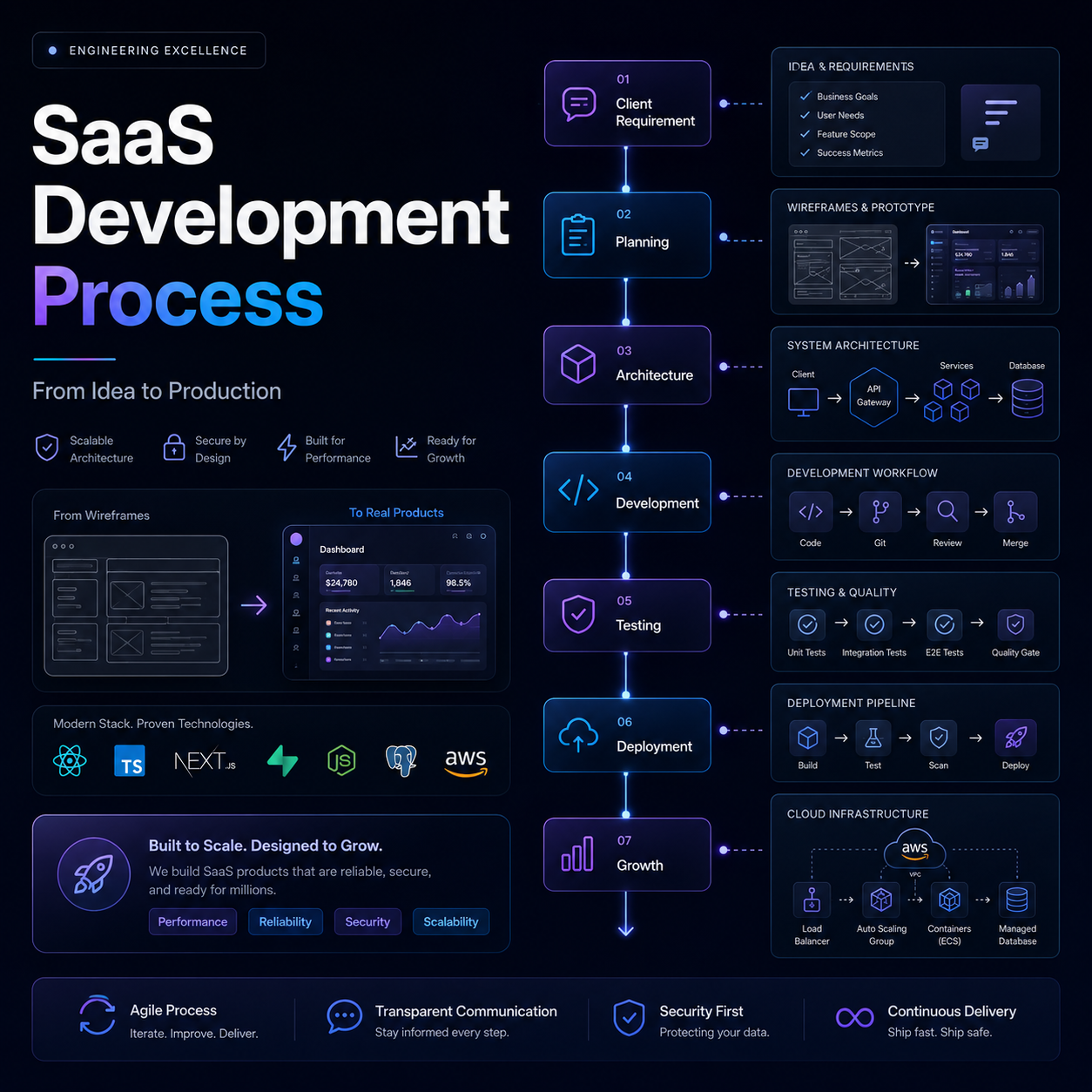
Discover how we transform SaaS ideas into production-ready platforms. From requirement gathering and architecture planning to development, deployment, and long-term support, here's our complete software development process.
Jun 10, 2026
Building a successful SaaS product is far more than writing code. Over the years, we've learned that the difference between a successful software product and an expensive failure often comes down to the planning, architecture, and development process behind it.
Whether we're building a startup MVP, a custom CRM, a B2B marketplace, a client portal, or a full-scale SaaS platform, we follow a structured development approach that helps us deliver scalable, maintainable, and production-ready software.
In this article, we'll walk through our complete SaaS development process and explain how we transform ideas into real-world software products.
If you're planning a SaaS product, custom software platform, or business automation solution, understanding the development lifecycle can save months of time and thousands of dollars in unnecessary rework.
Why Most SaaS Projects Fail
One of the biggest misconceptions in software development is that success depends entirely on coding.
In reality, most failed projects suffer from:
Poor requirement gathering
Lack of business validation
Weak architecture decisions
Inadequate scalability planning
Missing product strategy
Technical debt accumulation
We've seen businesses spend months developing features users never requested.
That's why our process starts with understanding the business before writing a single line of code.
Phase 1: Discovery & Requirement Gathering
Every successful SaaS project begins with discovery.
During this stage, we focus on understanding:
Business goals
Target users
Existing workflows
Pain points
Competitor landscape
Revenue model
Technical requirements
Questions we typically ask include:
What problem are we solving?
Understanding the actual business problem is critical.
For example:
Bad Requirement:
Build a CRM
Good Requirement:
Build a CRM that reduces manual lead management for real estate agencies
The second requirement provides context, which drives architecture and feature decisions.
Who are the users?
Different users require different experiences.
For example:
User Type Requirements
Admin Full platform access
Manager Reporting & team management
Staff Daily operational tasks
Customers Self-service portal
Understanding user roles early prevents major redesigns later.
Phase 2: Product Planning & Scope Definition
Once requirements are collected, we define the project scope.
This stage includes:
Feature prioritization
MVP planning
User journeys
Workflow mapping
Database planning
API requirements
One common mistake founders make is trying to build everything at once.
Performance
Accessibility
SEO
Responsiveness
User experience
Modern users expect applications to feel instant.
Performance is no longer optional.
Phase 8: Third-Party Integrations
Most SaaS products rely on external services.
Common integrations include:
Payment Systems
Stripe
Razorpay
PayPal
Communication
SMTP
Microsoft Graph
Twilio
WhatsApp APIs
Authentication
Google OAuth
Microsoft OAuth
GitHub OAuth
Storage
AWS S3
Cloudinary
Clients receive regular updates throughout the project lifecycle.
This reduces surprises and keeps development aligned with business goals.
Who We Work With
We help:
Startups
Agencies
SMEs
Growing businesses
Entrepreneurs
Enterprise teams
Our projects range from:
SaaS platforms
CRM systems
ERP solutions
B2B marketplaces
Client portals
Mobile applications
Business automation tools
Final Thoughts
Successful SaaS products aren't built through coding alone. They are built through thoughtful planning, scalable architecture, strong engineering practices, and continuous improvement.
By following a structured development process, businesses can reduce risk, accelerate delivery, and create software that remains maintainable as it grows.
Whether you're building an MVP, launching a new SaaS startup, or replacing legacy business software, investing in the right development process is one of the most important decisions you'll make.
If you're planning a SaaS platform, custom software solution, CRM, ERP, or automation system, our team can help transform your idea into a production-ready product built for long-term success.
Share:
Subscribe to my newsletter
Get the latest articles, tutorials, and updates delivered straight to your inbox. No spam, unsubscribe at any time.